
Proxy Server
$0.0269 /proxy
Min: 1000 Proxy
- Affordable Proxy
- Fast Proxy Servers
- Fully Customizable
- Fully Private
Webshare is a preeminent proxy service gaining attention for its broad network and versatile offerings. As more businesses and individuals seek reliable proxies for data scraping, social media management, and web security, understanding Webshare’s capabilities becomes essential. This review helps you explore what Webshare offers, its proxy types, pricing, and setup, so you can see if it suits your needs.
For those considering alternatives like Netnut or Luna Proxy, Webshare offers a flexible and cost-effective option to compete in a market filled with providers that offer similar services but with distinct features and strengths. We will review and guide you through everything from residential to datacenter proxies, performance metrics, and real-world applications to help you make an informed decision.
Webshare is a proxy provider that offers various types of proxies to cater to different user needs. It includes a vast proxy pool with residential, static residential, and datacenter proxies. Webshare is popular for its expansive global network, providing IP addresses from multiple countries. Its service supports both HTTP and SOCKS5 protocols, appealing to users who require reliable and scalable proxy access for tasks such as web scraping, SEO monitoring, and brand protection. This service stands out for its competitive pricing and user-friendly setup options.
Understanding the different types of proxies Webshare offers helps you select the right one. Each proxy type serves different purposes and suits specific use cases. Let’s explore them in detail, beginning with residential proxies, then static residential, followed by dedicated datacenter proxies. We also provide a comparison for a thorough insight.
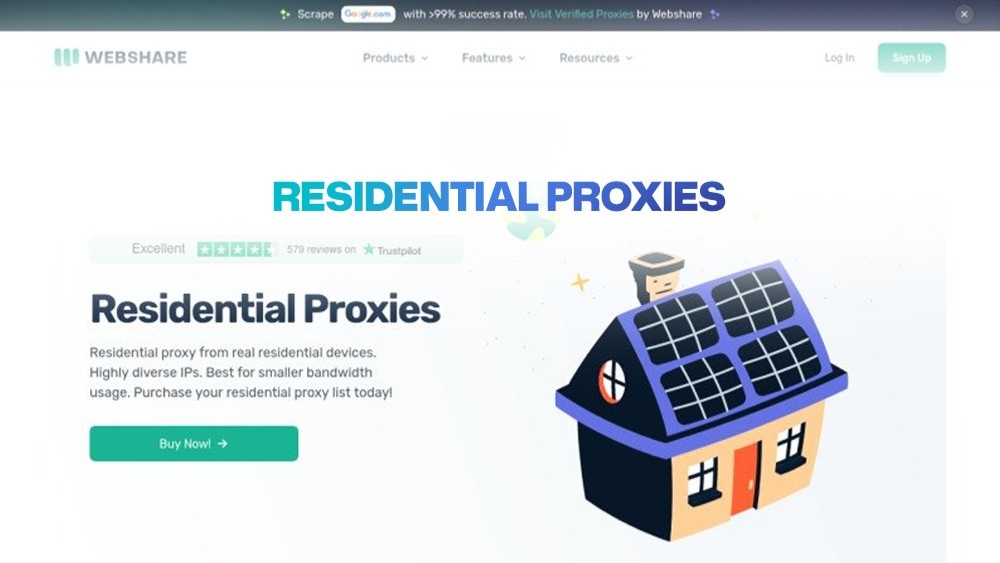
Webshare’s residential proxies provide users with IPs allocated by Internet Service Providers (ISPs) to genuine residential devices across the globe. With an extensive pool covering major countries, these proxies offer robust global reach.
A key feature is energetic IP rotation, which helps users avoid detection and blocking during tasks like web scraping and content verification. This makes them well-suited for sensitive operations requiring high anonymity, just like Proxys.io, which focuses on high anonymity proxies for similar tasks.
Webshare’s pricing varies based on usage volume and duration, giving users flexibility. Performance benchmarks consistently show strong success rates and reliable uptime, making these proxies effective for accessing geo-blocked or restricted sites. Plus, uninterrupted integration with common tools and APIs means you can easily incorporate them into your existing business workflows.
Static residential proxies from Webshare offer fixed IP addresses sourced from residential networks. The advantage is consistent IP assignment, ideal for tasks like social media account management where IP stability is crucial. Their coverage is slightly smaller than rotating residential pools but remains diverse geographically.
Its features include easy session control and longer connection durations. Pricing reflects this stability, often slightly higher than residential proxies. Performance testing highlights dependable connection speeds and uptime, making them favored for applications requiring IP consistency. Many companies use these proxies for automation and scraping tasks that need authentication over time.
Webshare’s dedicated datacenter proxies deliver fast, high-bandwidth connections from data centers. They provide a robust pool with a focus on performance and low latency. While datacenter proxies are easier to detect compared to residential proxies, they are cost-effective for large-scale data extraction or bulk operations. These proxies come with different pricing tiers based on the number of IPs and usage time.
Also, integration options allow seamless connection with various software. Benchmark results indicate that datacenter proxies excel in speed but may face higher risk of blocking on strict websites. Thus, they are suitable for applications where speed outweighs anonymity concerns.
The table below summarizes the key differences, typical use cases, benefits, and drawbacks of Webshare’s proxy types to help clarify their best applications.
| Proxy Type | Use Cases | Pros | Cons |
| Residential | Web scraping, Geo-blocking | High anonymity, diverse IPs | Higher cost, slower speed |
| Static Residential | Social media, Account mgmt | IP stability, consistent usage | Smaller IP pool |
| Dedicated Datacenter | Bulk data extraction | Fast speed, cost-effective | Easier to detect, blockable |
This comparison helps you match the proxy type with your specific needs, balancing anonymity, speed, and cost.
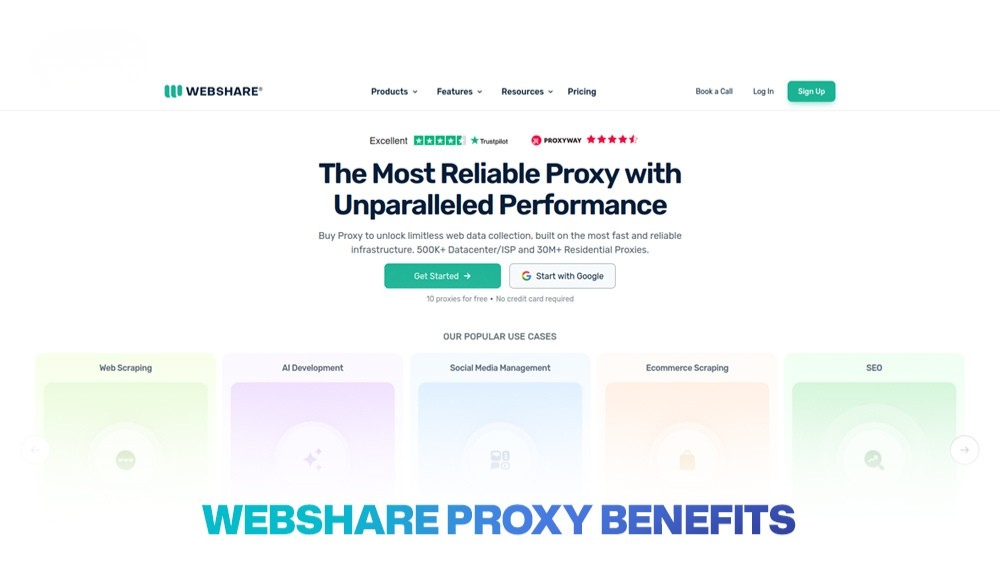
Webshare proxies excel in various scenarios by providing the following benefits:
These features make Webshare proxies highly versatile for businesses and individuals needing secure, anonymous, and efficient online operations.
Webshare proxies offer several powerful features that enhance your online activities. Their vast network size ensures access to millions of IP addresses from diverse global locations, supporting broad geographic coverage. This wide reach enables users to avoid geo-restrictions and access localized content effortlessly.
Webshare supports both HTTP and SOCKS5 protocols, ensuring compatibility with most applications. Its IP rotation and session control allow users to switch IPs seamlessly or maintain stable sessions depending on their needs. These options increase privacy and reduce blockages.
Performance benchmarks show Webshare delivers high speed, impressive success rates, and consistent uptime, ensuring reliable proxy connections. In cooperation, these features benefit users by providing secure, fast, and flexible proxy services ideal for web scraping, social media management, and brand protection.
Webshare offers flexible and budget-friendly pricing plans designed to fit different user needs, from beginners to enterprises. They provide a free plan that includes 10 proxies with 1GB of data monthly. This is ideal for light usage or testing. Paid plans use a pay-as-you-go model or monthly subscriptions, allowing you to scale according to your needs.
Pricing varies by proxy type:
| Proxy Type | Starting Price | Details |
| Datacenter Proxies | $2.99/month for 100 IPs | Affordable with scalability for large volume usage. |
| Static Residential | Around $6/month for 20 proxies | Offers consistent IPs, suitable for stable sessions. |
| Residential Proxies | From $7/month per 1GB bandwidth | Pricing decreases with volume; best for anonymity and geo-access. |
Webshare’s plans are more affordable compared to premium competitors while maintaining reliable service. This affordability and scalability make Webshare attractive for startups and professionals. Additionally, annual subscriptions provide further savings for regular users.
Min: 1000 Proxy
Min: 500 Proxy
Min: 25GB
This pricing model balances cost, flexibility, and quality. So it helps Webshare become an appealing proxy provider for various users.
This information leads you through setting up Webshare proxies correctly for optimal results. You will learn to create accounts, configure proxies, and integrate them into your tools, ensuring a smooth start and efficient usage. Let’s delve into the complete setup process.
Creating your Webshare account is the first step. Visit the official Webshare.io website and sign up using your email. After confirming your account, log in to the dashboard to access proxy services. Choose the proxy type best suited for your needs: residential, static residential, or datacenter proxies, depending on your use case and budget.
Webshare provides an intuitive dashboard for managing your subscriptions and proxy pools. For first-time users, starter plans or the free option allow testing the service’s features. We recommend evaluating your intended application to select the correct proxy type to maximize efficiency.
To configure Webshare proxies, start by generating access credentials, such as username and password, or whitelisting your IP address for authentication. Then, set your proxy protocol (HTTP or SOCKS5) and port as specified by Webshare.
Test your proxy connection using built-in tools or third-party software to verify accessibility. Configure session management options: decide on rotating IPs for anonymity or sticky sessions for stability. Adjust settings according to your workflow, ensuring the proxy works smoothly with your target application.
Always monitor usage quotas and bandwidth to avoid interruptions, and update credentials or IP lists as needed to maintain uninterrupted proxy access.
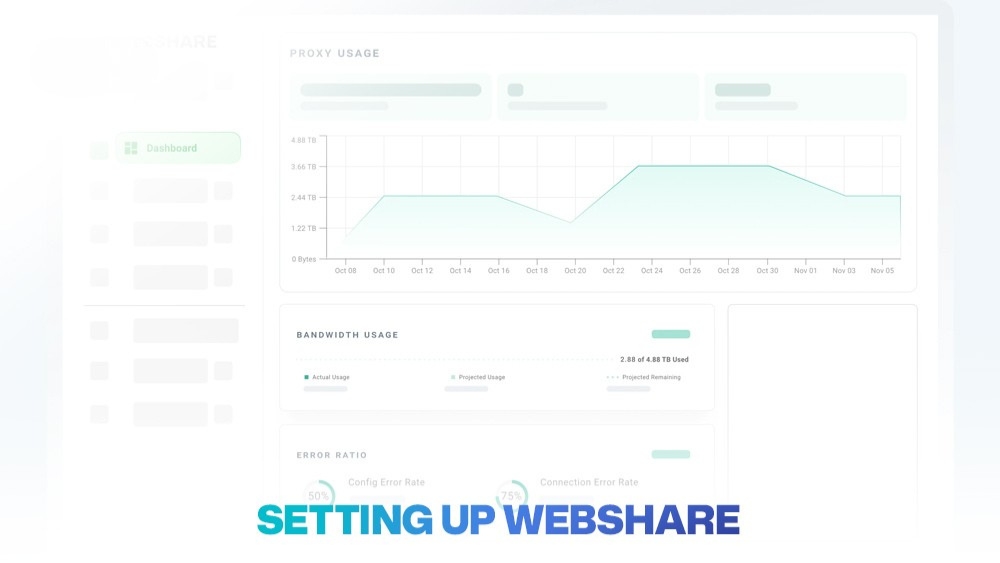
Webshare’s dashboard offers a comprehensive interface to manage proxies, monitor usage, and review performance metrics. You can easily view your active IPs, remaining bandwidth, and connection logs. The dashboard also enables real-time rotation controls and session management.
For developers, Webshare provides API access allowing automation of proxy requests, rotation, and reporting. Integration with apps or browsers is straightforward via standard proxy settings or supported extensions.
This flexibility improves efficiency, letting you customize proxy behavior and automate tasks such as web scraping or anonymous browsing without manual intervention.
The table below compares performance and reliability metrics among Webshare and major competitors like Oxylabs and 9Proxy, helping you choose the best proxy provider.
| Provider | Speed | Reliability | Pricing | Network Size | Protocol Support |
| Webshare | High | Strong | Affordable | Extensive (Residential + Datacenter) | HTTP, SOCKS5 |
| Oxylabs | Very High | Very Strong | Premium | Largest (Residential dominant) | HTTP, SOCKS5 |
| 9Proxy | High | Very Strong | Affordable | Large (Residential) | HTTP, SOCKS5 |
This comparison reveals Webshare’s competitive pricing and solid performance for most use cases.
Webshare places strong emphasis on protecting your data privacy through encrypted connections and ethical proxy sourcing. Its infrastructure reduces the risk of proxy leaks and bans by utilizing thorough IP rotation and session management techniques.
While Webshare ensures a high level of security, users should be aware that highly restrictive websites might still block connections. In such cases, Webshare’s troubleshooting support can help resolve issues efficiently.
Additionally, Webshare strictly follows legal and ethical standards, ensuring that proxy usage remains responsible and compliant with regulations. This commitment helps users maintain secure and legitimate online activities.
Users of Webshare proxies may face several common problems, such as connection failures, authentication errors, or IP bans. To resolve these:
These steps cover most problems and help maintain smooth proxy operations.
Webshare provides reliable customer support accessible around the clock through email and live chat, ensuring prompt assistance whenever needed. In addition:
Together, these resources create a supportive ecosystem for maximizing your Webshare proxy experience.
Webshare offers a flexible, affordable proxy service ideal for those needing a balance between performance and cost. Its diverse proxy types cater to beginners and professionals alike. While premium providers may offer larger networks, Webshare is compelling for its user-friendly pricing and reliable infrastructure. Consider your use case, budget, and required stability when choosing.
If you seek an accessible proxy solution with scalable plans and strong support, Webshare is a worthy option to explore further.
Webshare’s IP rotation uses a large pool of proxy servers and automatically switches the IP address with each new connection or after a set time. This makes each request appear as if coming from a different device or location, helping to avoid detection, bypass IP blocks, and reduce CAPTCHAs. Residential proxies are commonly used for rotation because they originate from real ISP-assigned IPs, enhancing anonymity. The rotation can occur automatically through Webshare’s rotating proxy endpoint without user intervention, or programmatically via APIs or proxy manager tools.
You can authenticate Webshare proxies either by: - For Username and Password: A traditional method where you include credentials in your proxy settings or client. - For IP Whitelisting: You register your IP address with Webshare, so no additional credentials are required, and only your IP can access the proxy pool. Most users choose one based on their security preference and application requirements. Webshare’s dashboard lets you manage these credentials easily
Webshare prioritizes security by offering encrypted connections and rotating IPs to prevent tracking and leaks. Residential IPs sourced ethically from real users enhance trustworthiness and anonymity. Data privacy compliance and ethical proxy sourcing reduce legal risks. Automatic IP rotation and session management further minimize blocking and exposure risks, making Webshare reliable for sensitive tasks such as brand protection and anti-fraud efforts.
While Webshare proxies work with most websites, highly restrictive platforms might detect or block rapid automated access regardless of proxy. Some websites may block certain proxy IPs due to past abuse. Webshare generally supports standard web ports for HTTP/S traffic, but for specialized ports or protocols, checking compatibility in advance is recommended. Troubleshooting and support from Webshare help address such issues.
Join thousands of satisfied customers and experience the best proxy service in the industry